
Collision vs Comprehensive Auto Insurance Coverage Explained
Collision vs comprehensive auto insurance coverage explained: learn which pays for accidents, theft, and weather so you avoid surprise repair bills.

By Julia Owens
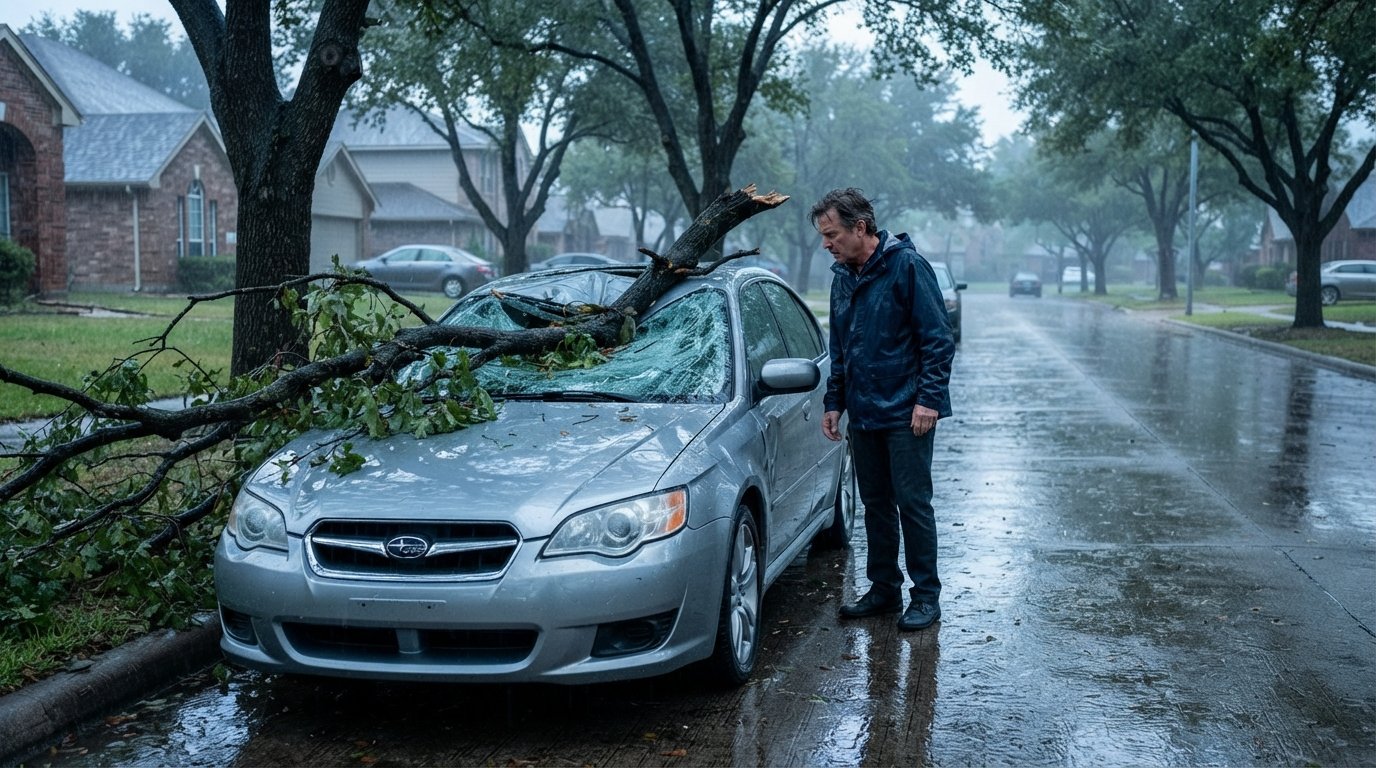
Your car is parked under a tree during a storm. A limb falls and smashes the windshield. Will your auto policy pay? The answer depends entirely on whether you carry comprehensive coverage, and that is just one of many scenarios where the collision vs comprehensive distinction matters. For many drivers, these two coverages blur together under the vague label of "full coverage," but they protect against completely different risks. Understanding the difference can save you from a denied claim, an unexpected out-of-pocket expense, or paying for coverage you do not actually need. This guide breaks down collision vs comprehensive auto insurance coverage explained in plain terms, with real-world examples, payout mechanics, and practical advice on when each is worth the cost.
What Collision Coverage Actually Pays For
Collision coverage is designed to repair or replace your vehicle when it is damaged in a collision with another object. That object can be another car, a guardrail, a tree, a fence, or even a pothole. The key is that the damage results from impact. If you rear-end another driver, sideswipe a mailbox, or spin out on an icy road and hit a light pole, collision coverage responds. It does not matter who caused the accident in terms of whether your own policy pays; your collision coverage will handle the damage to your car regardless of fault, though your insurer may later pursue subrogation against the at-fault party.
Collision coverage is particularly valuable for single-car accidents. If you swerve to avoid a deer and strike a tree, there is no other driver to hold responsible. Without collision coverage, you would pay for repairs entirely out of pocket. Similarly, if you hit a parked car and cannot locate the owner, collision coverage protects your vehicle. The coverage also applies when your car is damaged by a hit-and-run driver, though you will typically need to file a police report. In all these cases, collision coverage is the provision that gets your vehicle fixed.
It is important to note what collision does not cover. It excludes damage from events like theft, fire, hail, or vandalism. Those perils fall under comprehensive coverage. Collision also does not pay for injuries to you or your passengers; that is the role of medical payments or personal injury protection coverage. And it does not cover damage to other people's property or vehicles; liability coverage handles that. Collision is strictly about physical damage to your own vehicle caused by an impact.
What Comprehensive Coverage Actually Pays For
Comprehensive coverage, sometimes called "other than collision" coverage, protects your vehicle against a wide range of non-collision events. The most common examples include theft, fire, vandalism, hail, flood, wind, falling objects, and animal strikes. If a deer runs into your car, comprehensive pays. If your car is stolen and later recovered with damage, comprehensive pays. If a hailstorm dents your hood and roof, comprehensive pays. The coverage is intentionally broad because it is meant to address the unpredictable risks that have nothing to do with driving into something.
Comprehensive coverage also responds to glass damage, such as a cracked windshield from a flying pebble. Many policies offer a separate glass deductible or waive the deductible entirely for windshield repairs, which can make comprehensive especially attractive for drivers in areas with frequent road debris or temperature swings. Additionally, comprehensive covers damage from riots or civil disturbances, contact with a bird or animal, and even damage caused by a falling missile (though that is rare). Essentially, if the damage did not result from a collision, comprehensive is the coverage to look at first.
What comprehensive does not cover is equally important. It will not pay for damage from a collision with another vehicle or object. It also excludes normal wear and tear, mechanical breakdown, and damage from poor maintenance. If your engine fails because you skipped an oil change, comprehensive will not help. And like collision, comprehensive does not cover injuries or damage to other people's property. It is solely focused on your own vehicle's physical damage from non-collision events.
How Each Coverage Pays Out and How Deductibles Work
Both collision and comprehensive coverage come with a deductible, which is the amount you agree to pay out of pocket before your insurer covers the rest of the repair or replacement cost. Deductibles are typically set per claim, not per year, and they apply separately to each coverage. For example, you might choose a $500 deductible for collision and a $250 deductible for comprehensive. If you have a collision claim and a separate comprehensive claim in the same year, you would pay each deductible separately. This is a crucial point that many drivers miss: having a low deductible on one coverage does not affect the deductible on the other.
When you file a claim, your insurer will first subtract your deductible from the total repair cost. If the remaining amount is less than your deductible, you pay the full repair cost yourself and the insurer pays nothing. For instance, if your collision deductible is $1,000 and the repair estimate is $900, you would pay $900 and your insurer would not issue a payment. This is why choosing a deductible that matches your risk tolerance and emergency savings is essential. A higher deductible lowers your premium but increases your out-of-pocket cost when you file a claim.
Both coverages also have a payout limit, typically the actual cash value (ACV) of your vehicle at the time of loss. ACV accounts for depreciation, so if your car is older, the payout may be less than what you owe on a loan or what it would cost to buy a replacement. Some policies offer agreed value or replacement cost coverage, but those are less common and usually more expensive. Understanding your policy's valuation method helps you set realistic expectations for a claim.
Here is a quick comparison of how the two coverages handle common incidents:
- Rear-ending another car: Collision coverage pays for your vehicle's damage; the other driver's liability coverage may pay for their damage.
- Hitting a deer: Comprehensive coverage pays, because animal strikes are considered non-collision events.
- Car theft: Comprehensive coverage pays for the loss or damage from theft.
- Hailstorm damage: Comprehensive coverage pays for dents and glass damage.
- Single-car accident into a guardrail: Collision coverage pays for your vehicle's damage.
Notice that in each case, only one coverage responds. There is no overlap. That is why drivers who want broad protection typically carry both.
Why Lenders and Lessors Usually Require Both Coverages
If you finance or lease a vehicle, your lender or leasing company will almost certainly require you to carry both collision and comprehensive coverage. The reason is simple: the vehicle is their collateral. If the car is totaled in an accident or stolen, the lender wants to be sure the loan will be repaid. Collision coverage protects against the vehicle being destroyed in a crash, while comprehensive protects against theft or natural disasters. Without both, the lender faces the risk that you default on the loan while the car is worthless or gone.
Leasing companies have similar requirements. Since you do not own the leased vehicle, the lessor insists on full physical damage coverage to protect their asset. The specific deductible limits may be set by the lender, often requiring a deductible no higher than $500 or $1,000. If you fail to maintain the required coverage, the lender may purchase force-placed insurance on your behalf and add the cost to your loan or lease payment, which is usually much more expensive than shopping for your own policy.
Even after you pay off your car, you may choose to keep both coverages if the vehicle is still valuable. The decision becomes a math problem: compare the annual cost of collision and comprehensive premiums against the potential out-of-pocket cost of repairing or replacing the car. If your car is worth $5,000 and your combined annual premium for both coverages is $600, you might decide the coverage is worth it. If your car is worth $1,500 and the premium is $500, you might drop the coverages and self-insure. There is no universal right answer, but understanding the trade-off is key.
Real-World Examples: Which Coverage Responds?
Consider a driver named Maria who parks her car on the street. During a windstorm, a large branch falls and crushes the roof. Maria has comprehensive coverage with a $250 deductible. Her insurer pays for the repair minus the deductible. If Maria had only collision coverage, the claim would be denied because the damage was not caused by a collision. This example highlights why comprehensive is essential for drivers who park under trees or in areas prone to severe weather.
Now imagine James, who is driving home from work and rear-ends another car at a stoplight. His front bumper is damaged. James has collision coverage with a $500 deductible. His insurer pays for the repair minus $500. If James had only comprehensive coverage, his claim would be denied because the damage resulted from a collision. Even though the accident was his fault, collision coverage still applies to his own vehicle. Liability coverage would handle the other driver's damage, but collision is what fixes James's car.
Another scenario: Sarah's car is stolen from a parking garage. The thief damages the ignition and the rear bumper before abandoning the vehicle. Sarah has both coverages. Her comprehensive coverage pays for the theft-related damage, including the ignition and bumper, minus her comprehensive deductible. Her collision deductible does not apply because there was no collision. If Sarah had only collision, she would have no coverage for the theft. This underscores that comprehensive is the only coverage that addresses theft, regardless of how the damage occurs.
Finally, consider a hailstorm that dents the hood and roof of David's truck. David has a $1,000 deductible on both coverages. The repair estimate is $1,200. Comprehensive coverage applies, and David pays $1,000 out of pocket. His insurer pays $200. David might wonder if it is worth filing a claim for such a small payout, but the claim is valid. If the damage had been from a collision, collision coverage would have applied instead. The key takeaway is that the cause of damage, not the location or the driver's actions, determines which coverage responds.
How to Decide If You Need Collision, Comprehensive, or Both
Deciding whether to carry collision, comprehensive, or both depends on several factors: your vehicle's value, your financial situation, your risk exposure, and your state's requirements. Most states do not mandate collision or comprehensive coverage, but lenders and lessors do. If you own your car outright, the choice is yours. A common rule of thumb is to carry both coverages if your car is worth more than a few thousand dollars and you could not easily afford to repair or replace it out of pocket. If your car is older and low in value, the premiums may outweigh the benefits.
You should also consider your environment. If you live in an area with high rates of car theft, comprehensive coverage is particularly valuable. If you frequently drive in heavy traffic or hazardous conditions, collision coverage may be worth the cost. If you park in a garage and drive infrequently, you might lean toward comprehensive only, but remember that collision still protects you if you hit something. Many drivers find that carrying both provides peace of mind, especially if they have a loan or lease.
To make the best decision, review your policy's premiums for each coverage separately. Ask your insurer for a quote with both coverages, with only collision, and with only comprehensive. Then compare those costs against your car's value and your emergency fund. If you have $5,000 in savings and your car is worth $4,000, you might choose a higher deductible to lower your premium while still maintaining coverage. If you have no savings and your car is worth $10,000, carrying both with a moderate deductible is likely wise.
Finally, remember that insurance is about transferring risk. Collision and comprehensive coverage transfer the risk of physical damage to your vehicle to the insurer. If you can afford to self-insure, you might save money by dropping one or both. But if a major repair or replacement would strain your finances, keeping both coverages is a prudent choice. For personalized guidance and comparison tools, you can explore resources like InsuranceShopping to understand your options and find competitive quotes.
Common Pitfalls and How to Avoid Them
One of the most common pitfalls is assuming that "full coverage" automatically includes both collision and comprehensive. In reality, "full coverage" is not a standardized term and can mean different things to different insurers. Always review your policy declarations page to confirm exactly which coverages are included and what deductibles apply. Another pitfall is forgetting that deductibles apply per claim, not per year. If you have multiple claims in a year, you will pay your deductible each time.
Another mistake is dropping comprehensive coverage to save money but keeping collision, or vice versa, without understanding the gaps. For example, if you drop comprehensive to save $100 per year but then your car is stolen, you could lose thousands. Similarly, if you drop collision but then cause an accident, you will pay for your own repairs. It is essential to evaluate the risks you face and the likelihood of a claim. If you live in an area with frequent hail, comprehensive is a must. If you drive in dense traffic daily, collision is a must.
Finally, be aware of the interaction between collision and comprehensive coverage and your liability coverage. Liability pays for damage you cause to others, but it does not pay for your own vehicle. If you cause an accident and do not have collision coverage, you will pay for your own repairs even though your liability coverage pays for the other driver's damage. Understanding these boundaries helps you build a policy that truly protects you. As you shop for auto insurance, take time to compare quotes and coverage details carefully. Sites like InsuranceAdvisers.com offer educational guides and comparison tools to help you make informed decisions, and you can also visit our guide on calculating life insurance needs for broader financial planning context.
Collision and comprehensive coverage serve distinct but complementary roles in your auto insurance policy. Collision pays for damage from impacts, while comprehensive pays for everything else from theft to weather. Both come with separate deductibles and both are typically required on financed or leased vehicles. By understanding how each responds in real-world scenarios, you can choose the right coverage for your situation and avoid costly surprises. Whether you decide to carry both, one, or neither, make the choice with clear eyes and accurate information.