
Does Homeowners Insurance Cover Natural Disasters?
Does homeowners insurance cover natural disasters? Wind and fire are usually covered, but flood and earthquake need separate policies. Review your ZIP code risk.

By Reed Reed
When a wildfire forces your neighborhood to evacuate or a hailstorm shatters your skylight, the first question most homeowners ask is simple: will my policy pay for this? The answer is rarely a clean yes or no. A standard homeowners insurance policy is built around a list of covered perils, and natural disasters sit on both sides of that list. Some events, like wind and fire, are almost always included. Others, like flood and earthquake, are typically carved out and require separate policies. Understanding where your risk falls is the difference between a smooth claim and a financial surprise, so let's walk through how coverage actually works.
What a Standard Homeowners Policy Typically Covers
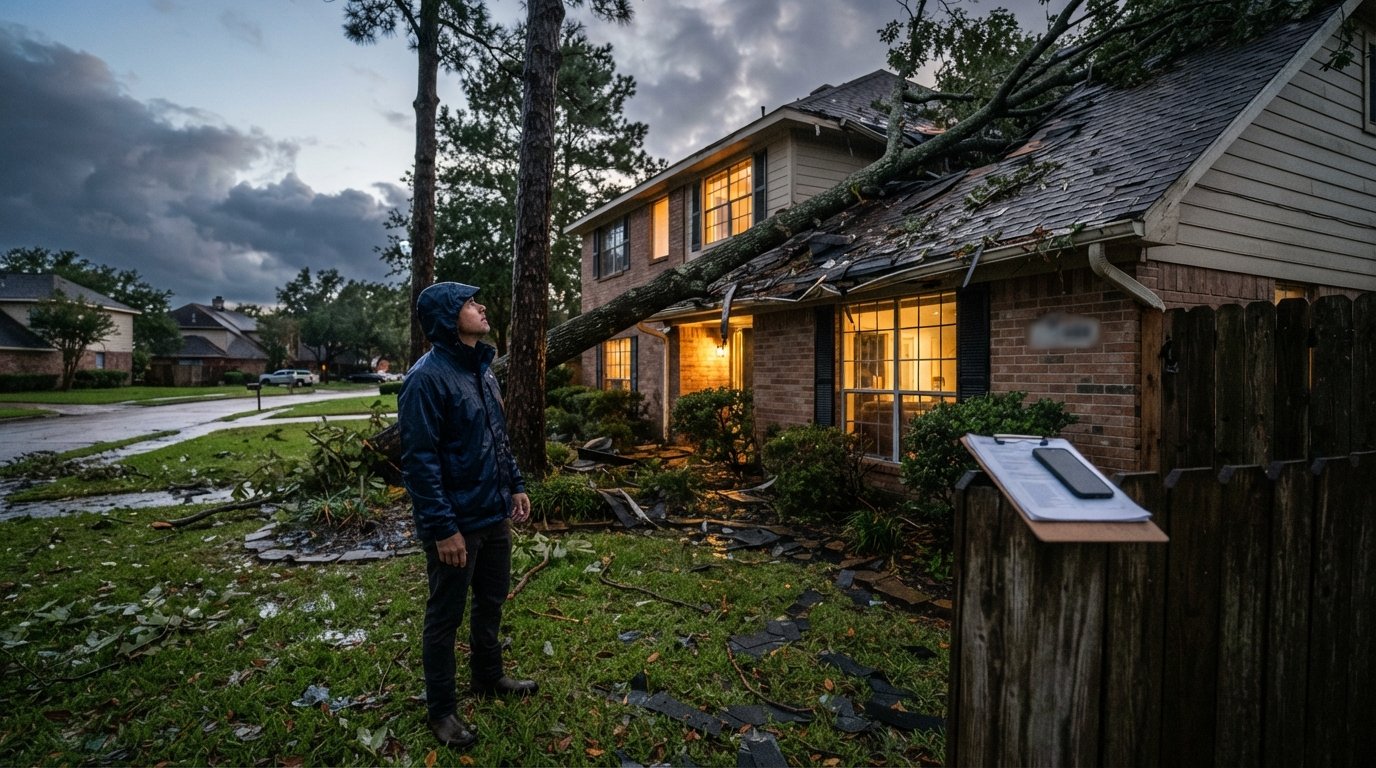
Most U.S. homeowners policies are written on an HO-3 or similar form, which covers the dwelling and personal property against a defined list of perils. When it comes to natural events, the list usually includes windstorms, hail, lightning, fire and smoke damage, and the weight of ice or snow. If a falling tree limb punctures your roof during a thunderstorm, that damage generally falls within the policy. The same logic applies to smoke damage from a nearby fire or water damage from a burst pipe (though pipe bursts are a plumbing failure, not a natural disaster).
The key mental model is this: standard policies protect against sudden and accidental damage from named perils. A tornado tearing off shingles, hail denting gutters, or lightning starting a kitchen fire all fit that pattern. That is why most carriers in the Midwest and South treat wind and hail claims as routine, even when the repair bills run into the tens of thousands.
It helps to see the common covered perils side by side before comparing them to the exclusions:
- Wind and hail: usually covered, though coastal areas may use a separate percentage deductible (more on that below).
- Fire and lightning: core covered perils in virtually every standard policy.
- Falling objects: a tree or limb striking the roof or walls is typically covered.
- Weight of ice and snow: roof collapse from accumulated snow is generally included.
- Vandalism and theft: not weather-related, but often bundled into the same peril list.
Notice what is missing from that list: flooding and earth movement. That omission is deliberate, and it is where most coverage confusion begins. The Insurance Information Institute and most state insurance departments consistently report that flood damage is excluded from standard homeowners policies, which is why the National Flood Insurance Program and private flood carriers exist as separate markets. Earthquake coverage follows the same pattern, typically available only as an endorsement or a standalone policy.
Why Flood and Earthquake Damage Are Usually Excluded
Insurers exclude catastrophic, widespread perils because the losses are correlated. A single hailstorm hits one neighborhood; a major flood can hit entire river basins and produce claims across thousands of policies at once. To keep premiums affordable and solvency intact, carriers push flood and earthquake risk into separate programs with their own underwriting, mapping, and pricing.
This matters for homeowners because the exclusion is strict. If a hurricane storm surge pushes water into your living room, the wind damage to your roof may be covered while the water damage is not. Adjusters call this the wind-versus-water distinction, and it is one of the most litigated issues in property insurance. If a river overflows after days of rain and floods your basement, that is a flood loss, full stop, and your standard policy will not respond.
Earthquake follows the same logic. A policy might cover a fire that starts after an earthquake, but the shaking damage itself is excluded unless you added an endorsement. In California, Washington, and parts of the New Madrid seismic zone, separate earthquake policies or endorsements are common, and deductibles are often expressed as a percentage of dwelling coverage rather than a flat dollar amount. Homeowners in those regions should treat earthquake coverage as a distinct purchase decision, not an assumption.
Flood insurance itself comes in two main flavors. NFIP policies are administered federally and have coverage caps and waiting periods, while private flood carriers increasingly offer higher limits and broader terms. Either way, the coverage is separate from your homeowners policy, and there is typically a 30-day waiting period before a new NFIP policy takes effect, so buying right before a storm rarely helps.
Hurricane Deductibles and Other Coverage Twists
Even when a peril is covered, the deductible can change the math. In coastal states from Texas to Maine, many policies include a separate hurricane or windstorm deductible expressed as a percentage of the dwelling limit, often 1% to 5%. On a home insured for $400,000, a 2% hurricane deductible means $8,000 out of pocket before the insurer pays a dollar, compared with a flat $1,000 standard deductible for a kitchen fire.
That difference is not a technicality. It changes how you should think about emergency savings and how you compare quotes. Two policies with identical premiums can behave very differently in a hurricane if one carries a 1% deductible and the other carries a 5% deductible. When you review a quote, look for the hurricane or named-storm deductible section, not just the standard deductible on the declarations page.
Other twists worth knowing include:
- Wind/hail deductibles: some inland states, including Texas and Colorado, allow separate percentage deductibles for wind and hail claims.
- Cosmetic damage exclusions: certain policies exclude cosmetic damage to metal roofs or siding from hail, even when the damage is real.
- Ordinance or law coverage: rebuilding to current code after a covered loss may require an endorsement.
- Loss of use: most policies pay for temporary housing if a covered peril makes your home uninhabitable, which matters during wildfire or tornado recovery.
These details rarely make headlines, but they determine how much a claim actually pays. Reading the endorsements and exclusions section once, before a loss, is the cheapest insurance advice available.
How to Review Your Risk Exposure by ZIP Code and Address
Risk is local. A home on a ridge in Oklahoma faces different wind and hail exposure than a home in a river valley in Missouri, and a coastal Florida address carries storm surge risk that an inland address does not. The practical move is to layer several sources of information rather than rely on a single score.
Start with the address-level flood zone. FEMA flood maps assign zones such as AE, X, and VE, and lenders use them to set escrow requirements. A zone X designation means moderate to low risk, not zero risk, and many recent flood disasters occurred outside high-risk zones. Next, check state insurance department resources for hurricane or wind deductible rules, and ask carriers directly how they treat wind, hail, and water damage at that specific address.
A simple review sequence looks like this:
- Look up the property on FEMA's flood map service and note the zone and base flood elevation.
- Request a CLUE report (Comprehensive Loss Underwriting Exchange) to see prior claims at the address, which affect pricing and eligibility.
- Ask each carrier for the hurricane or wind deductible, the water damage exclusions, and whether earthquake coverage is available as an endorsement.
- Compare quotes side by side on total annual cost plus out-of-pocket deductible exposure, not premium alone.
- Decide whether separate flood or earthquake coverage belongs in the budget for that specific property.
Once you have that information, shopping becomes much more concrete. If you are also reviewing auto coverage while bundling, our guide on lowering car insurance premiums without changing coverage walks through the same tradeoff between price and protection. And if you want a broader starting point, InsuranceShopping.com offers comparison tools and educational content that help U.S. consumers line up home, auto, health, life, and Medicare options in one place.
Common Gaps Homeowners Miss
The most expensive coverage gap is the one nobody reads about until a claim is denied. Flood is the classic example, but there are others. Sewer backup, for instance, is often excluded or capped at a low limit unless you add a water backup endorsement. Sump pump failure falls into the same category. In wildfire-prone states, some policies apply special deductibles or require defensible space measures, and in hurricane states, wind-driven rain exclusions can limit interior water damage even when the roof was compromised by wind.
Another gap is valuation. Replacement cost coverage pays to rebuild at today's prices, while actual cash value coverage subtracts depreciation. After a major disaster, construction costs spike, and a policy with extended replacement cost or a inflation guard endorsement handles that better than a bare actual cash value policy. If your dwelling limit was set five years ago, it may no longer reflect what it costs to rebuild.
Finally, consider the sequence of events. A wildfire that destroys a home is covered under fire, but the smoke and ash damage to a home that survives may require documentation and a careful adjuster conversation. Photograph your belongings, keep receipts for major purchases, and store an inventory in the cloud. That habit costs nothing and speeds up every claim, from hail to hurricane.
The bottom line is that homeowners insurance covers many natural disasters, but not all of them, and the details live in the deductible schedule and exclusion list rather than the marketing brochure. Wind, hail, fire, and lightning are typically covered. Flood and earthquake are typically not, and hurricane deductibles often differ from standard ones. Review your address-level risk, ask carriers the uncomfortable questions, and price the separate policies before the storm season arrives. A few hours of comparison today is far cheaper than discovering a gap the week after a disaster.