
Hit and Run Accident With No Witnesses: Insurance Steps to Take
Hit by a driver who fled? Learn the exact insurance steps to take after a hit and run accident with no witnesses, from filing a police report to using UM coverage.

By Alice Keller
The screech of tires, a sudden impact, and the other vehicle is gone before you can even react. If you are standing on the side of the road after a hit and run accident with no witnesses, your mind is likely racing: Will my insurance cover this? What do I do now? The good news is that you have options, and a clear sequence of steps can protect both your safety and your financial recovery. This guide walks you through exactly what to do with insurance after a hit and run when no one else saw what happened, from documenting the scene to filing a claim and understanding how your coverage responds.
Step 1: Secure the Scene and Document Everything
Your first priority is always safety. If you are injured, call 911 immediately. If you are not seriously hurt, move your vehicle to a safe location, turn on your hazard lights, and check for injuries among your passengers. Once it is safe to do so, begin documenting the scene as thoroughly as possible. Even without witnesses, physical evidence can support your claim and help insurers understand what happened.
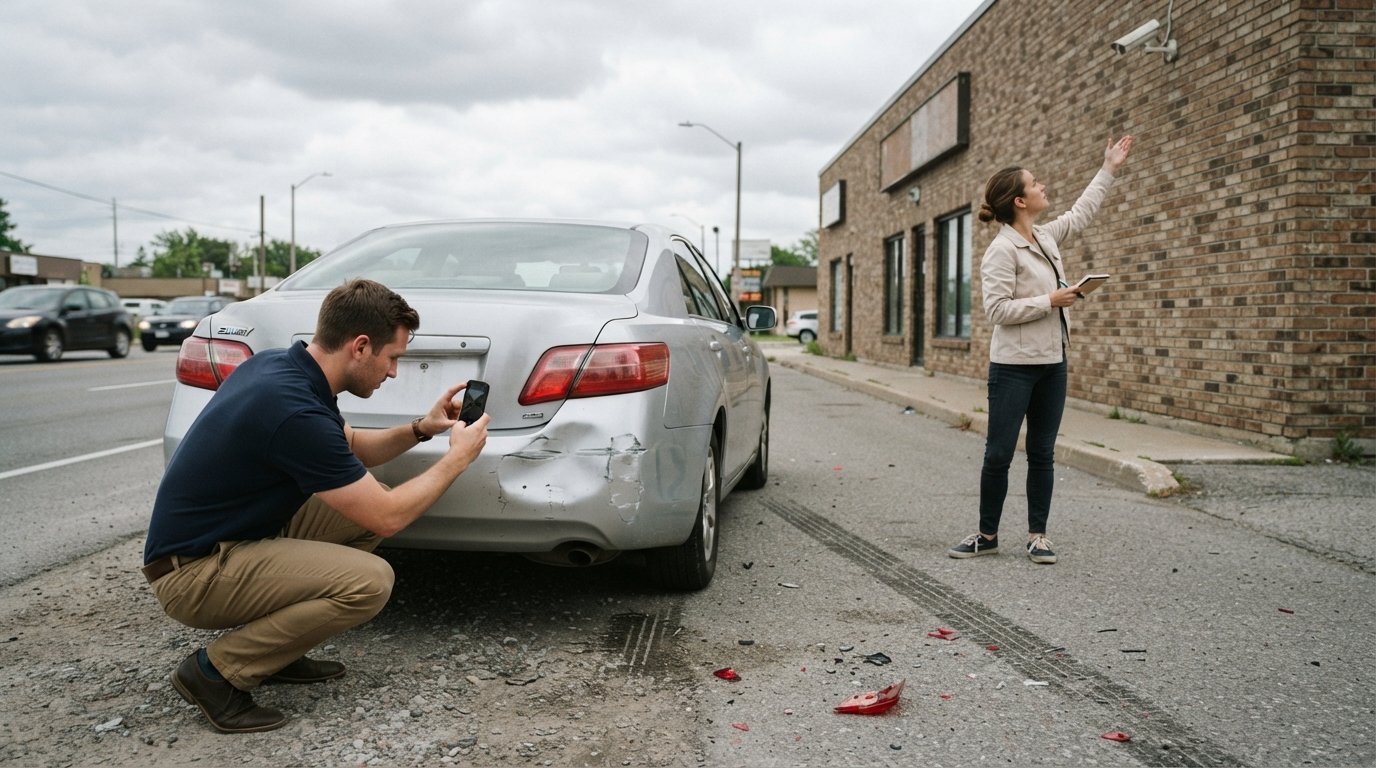
Take photos and videos from multiple angles: the damage to your car, the position of your vehicle, the road conditions, any skid marks, and debris left behind by the other vehicle. Look for paint transfer on your bumper or side panels, and photograph any fragments of the other car's lights or trim. If you notice security cameras on nearby buildings or homes, note their locations. These recordings can serve as crucial evidence later, even if no human witness was present.
Write down the time, date, and location of the accident as soon as possible. Memory fades quickly, and a detailed contemporaneous record carries weight with claims adjusters. Include the direction you were traveling, the weather, and any details you remember about the other vehicle (color, make, model, partial license plate, or distinguishing features). Even a partial plate or a vague description is better than nothing and may help police connect your incident to other reports.
Step 2: File a Police Report Promptly
Filing a police report is one of the most important steps after a hit and run, even if no witnesses are available. A formal police report creates an official record of the incident, which insurers often require to process a claim under uninsured motorist coverage. It also initiates a search for the at-fault driver, and if the police locate that person, your claim may shift from your own policy to the other driver's liability coverage.
Timelines for filing a police report vary by state and jurisdiction, but sooner is always better. Some states require you to report an accident within 24 to 72 hours if there is injury or significant property damage. Even in states with looser requirements, waiting can raise red flags with your insurer and weaken your claim. Call the non-emergency police line or 911 if the accident is blocking traffic or someone is hurt, and request a copy of the report number for your records.
When you speak with the officer, be honest and detailed. Mention any evidence you collected, including camera locations and debris. If the police later identify the other driver, the report will be updated, and your insurer can pursue subrogation (recovering costs from the at-fault party). Without that report, your options narrow considerably, so do not skip this step even if the damage seems minor.
Step 3: Notify Your Insurer and Understand Your Coverage
Contact your insurance company or agent as soon as practical after the accident. Most policies require prompt notice, and delays can complicate your claim. When you call, provide the facts clearly: you were hit by an unidentified driver who fled the scene, you have filed a police report, and you have photos and documentation. Your insurer will open a claim and assign an adjuster to investigate.
Now is the time to understand which coverage applies. In a hit and run with no witnesses, the at-fault driver's liability insurance is unavailable because that driver is unknown. That means you will likely rely on your own policy. Two coverages are central here: uninsured motorist (UM) coverage and collision coverage. UM coverage is designed for accidents involving drivers with no insurance or, in many states, hit and run drivers. Collision coverage pays for damage to your vehicle regardless of fault, but it typically comes with a deductible.
Here is a quick breakdown of how these coverages interact in a hit and run scenario:
- Uninsured motorist (UM) coverage: May cover bodily injury and, in some states, property damage when the at-fault driver cannot be identified. Deductibles are often lower or waived for UM claims.
- Collision coverage: Covers vehicle damage from the hit and run regardless of fault. A deductible usually applies, and you pay it upfront unless your policy states otherwise.
- Medical payments (MedPay) or personal injury protection (PIP): Covers medical bills for you and your passengers regardless of fault, often without a deductible.
- Rental reimbursement and towing: May be included or optional, helping with temporary transportation while your car is repaired.
The specific rules vary by state and policy. For example, some states require insurers to offer UM coverage, while others make it optional. Some states treat hit and run accidents as uninsured motorist claims by definition, while others require you to demonstrate that the other driver was at fault and unidentified. Review your declarations page or ask your adjuster to clarify which coverage will respond. If you are unsure whether your policy includes UM or collision, now is the time to find out, ideally before an accident happens.
Step 4: Work With the Claims Adjuster
After you file the claim, a claims adjuster will contact you to gather information and inspect the damage. Be cooperative but organized. Provide your photos, the police report number, and a written timeline of events. The adjuster will assess the damage, review your coverage, and determine how much the insurer will pay. In a hit and run with no witnesses, the adjuster may ask detailed questions to rule out fraud or staged accidents, so consistency and documentation matter.
Expect the adjuster to request a recorded statement. You are generally required to cooperate with your insurer's investigation, but you can ask for clarification on how the statement will be used. Stick to the facts you have already documented and avoid speculating about details you do not remember. If the adjuster proposes a settlement for vehicle damage, compare it against independent repair estimates. You are not obligated to accept the first offer, and you can negotiate if the estimate seems low.
If your claim involves bodily injury, the adjuster may ask for medical records and bills. Keep thorough records of all treatment, including emergency room visits, follow-up appointments, and physical therapy. Document any time missed from work and keep receipts for out-of-pocket expenses. The more organized your documentation, the smoother the process will be. Remember that InsuranceAdvisers.com is not an insurance company or adjuster; it is an educational resource that can help you understand your options and connect you with licensed professionals who can answer specific coverage questions.
Step 5: Manage Deductibles and Anticipate Rate Impact
One of the most common concerns after a hit and run is the deductible. If you file a collision claim, you will typically pay your deductible before the insurer covers the rest of the repair cost. For example, if the damage is $3,000 and your deductible is $500, you pay $500 and the insurer pays $2,500, up to your policy limits. If you have UM property damage coverage, the deductible may be lower or waived, depending on your state and policy. Some insurers waive the deductible if the hit and run driver is later identified and has insurance, but that is not guaranteed.
Another concern is how a hit and run claim affects your premium. In many states, insurers cannot surcharge your rate for a claim that was not your fault, including a hit and run where you were the victim. However, rating rules vary, and some insurers may apply a surcharge or decline a good driver discount after any claim, regardless of fault. Ask your agent directly how the claim will be rated and whether it will affect your policy at renewal. If the impact is significant, you may want to shop around for a new policy, but do so after your claim is resolved to avoid complications.
If you are considering whether to file a claim at all, weigh the cost of repairs against your deductible and the potential premium impact. For minor damage, paying out of pocket may be cheaper in the long run. For significant damage or any injury, filing a claim is usually the right choice. Trust your judgment, and do not let fear of a rate increase prevent you from using coverage you have paid for.
Step 6: Explore Additional Recovery Options
Even without witnesses, you may have avenues for recovery beyond your own policy. If the police later identify the hit and run driver, your insurer can pursue subrogation against that driver's liability insurance, and you may recover your deductible. Some states have victim compensation funds that can help with medical expenses or other losses in certain hit and run cases, though eligibility rules are strict. If you have health insurance, your medical bills may be covered under that policy, and your auto insurer may coordinate benefits.
If you are struggling to get your claim approved or feel the settlement is unfair, you can file a complaint with your state's department of insurance. This regulator oversees insurers and can mediate disputes. You can also consult a personal injury attorney if you have significant injuries or if the insurer denies your claim without a clear reason. Legal advice is especially valuable if the police identify the other driver and you need to pursue a claim against them.
Finally, take steps to protect yourself going forward. Review your auto policy to ensure you have adequate uninsured motorist and collision coverage. Consider adding UM coverage if you do not have it, and check whether your deductible is manageable. For a deeper look at related coverage decisions, see our guide on gap insurance for a new car, which explains how to avoid being upside down on a vehicle loan after a total loss. And if you are ready to compare policies or explore coverage options, InsuranceShopping.com offers tools and resources to help you shop confidently.
Being the victim of a hit and run with no witnesses is stressful, but you are not powerless. By documenting the scene, filing a police report, notifying your insurer, and understanding how your coverage responds, you can navigate the claims process and protect your financial interests. Stay organized, ask questions, and use the resources available to you. With the right steps, you can move forward and get back on the road with confidence.